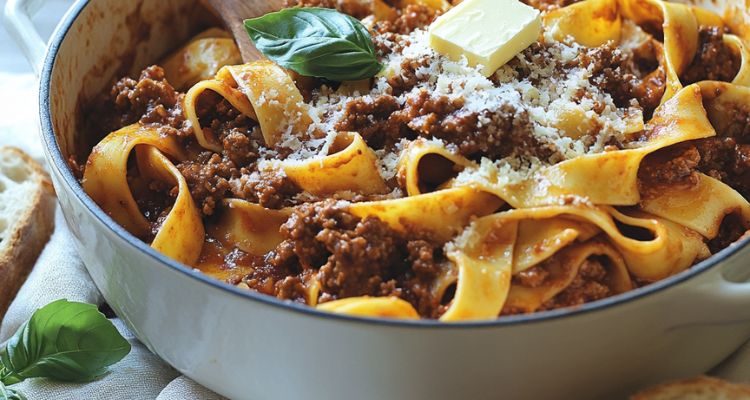
Giada bison bolognese from Giada De Laurentiis swaps ground bison for beef in a quick tomato sauce with white wine and a Parmesan rind tossed with pappardelle. And the dish serves 8 at approximately 520 calories per serving in about 50 minutes, since the sauce only simmers for 25.
Most bolognese recipes call for a multi-hour simmer to develop depth, but Giada builds concentrated flavor in under 30 minutes by reducing the wine almost completely before the tomatoes go in. So the alcohol cooks off and leaves behind a syrupy sweetness that would normally take hours of simmering to achieve.
Breaking the bison into very small pieces with a wooden spoon during the first 8 minutes is what gives the sauce its fine, traditional texture. And if you leave the meat in large crumbles, the sauce feels chunky instead of coating each strand of pappardelle evenly.
Source: Giada De Laurentiis (Giadzy.com)
Giada Bison Bolognese Recipe
Course: Beef4
servings30
minutes40
minutes300
kcalGround bison browns with red onion, carrot, and garlic before white wine reduces and hand-crushed San Marzano tomatoes simmer with a Parmesan rind and basil stems. Then pappardelle cooked 2 minutes short of al dente tosses directly into the sauce with butter and grated Parmigiano.
Ingredients
- For the sauce:
3 tablespoons olive oil, plus more to finish
1 pound ground bison
1/2 red onion, chopped
1 medium carrot, chopped fine
2 cloves garlic, smashed and peeled
1 teaspoon kosher salt, plus more for pasta water
1 cup dry white wine
1 (28-oz.) jar whole San Marzano tomatoes, crushed by hand
1 (3-inch) piece Parmesan cheese rind
2 stems fresh basil
2 tablespoons unsalted butter
- For the pasta:
1 pound pappardelle
1 cup freshly grated Parmigiano Reggiano, plus more to serve
Directions
- Brown the bison: Heat the olive oil in a Dutch oven over medium-high heat, add the ground bison, and cook about 8 minutes while breaking it into very small pieces.
- Add the vegetables: Once lightly browned, stir in the red onion, carrot, and garlic, and season with 1 teaspoon salt.
- Soften the aromatics: Then cook for 3 minutes until the vegetables are soft and fragrant.
- Deglaze with wine: Once fragrant, pour in the white wine and scrape up the brown bits from the bottom.
- Reduce the wine: Then simmer for about 5 minutes until the wine is almost completely reduced.
- Add the tomatoes: Once the wine is reduced, stir in the hand-crushed tomatoes.
- Nestle in the rind and basil: Then add the Parmesan rind and basil stems into the sauce.
- Simmer the sauce: Once everything is in, reduce to medium and simmer for 25 minutes, stirring occasionally.
- Cook the pasta: Meanwhile, boil the pappardelle in generously salted water for about 6 minutes, 2 minutes less than the package directs.
- Toss in the sauce: Then use tongs to transfer the pasta directly from the water into the sauce.
- Add the cheese and butter: Once the pasta is in, add the grated Parmigiano and butter directly onto the bare noodles.
- Finish and serve: Then toss everything together, drizzle with olive oil, and serve with extra cheese on top.
FAQs
Can I use ground beef instead of bison?
Ground beef works as a direct swap at the same weight, though bison is leaner so beef produces a richer, fattier sauce. And an 80/20 beef blend adds more rendered fat during browning, so you may want to drain a tablespoon before adding the vegetables.
But bison has a slightly sweeter, cleaner flavor that lets the San Marzano tomatoes and wine come through more clearly. Since the sauce only simmers 25 minutes, leaner meat also prevents the finished dish from feeling heavy.
Why does the recipe call for a Parmesan rind in the sauce?
The rind softens during the simmer and releases starchy, salty umami directly into the tomato base. And it acts as a natural thickener, so the sauce clings to the wide pappardelle better than a rind-free version would.
But remove the rind and basil stems before tossing the pasta in, since they have done their job by the end of the 25 minutes. And save rinds from finished Parmesan wedges in the freezer, because they keep for months and work in any braised sauce or soup.
Why does the pasta cook 2 minutes less than the package says?
The pappardelle finishes cooking inside the sauce when you transfer it with tongs, and the starchy pasta water clinging to the noodles helps emulsify the butter and cheese. Since fully cooked pasta turns mushy during that final toss, pulling it early keeps each strand al dente on the plate.
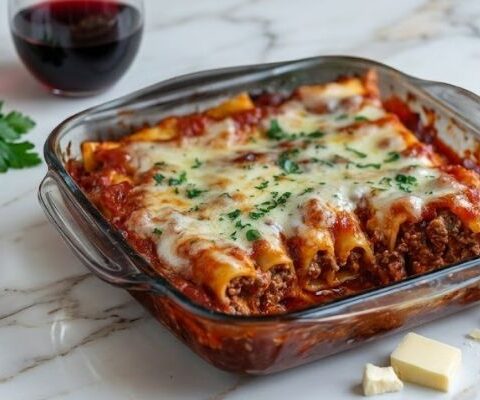
And transferring directly from the pot with tongs is better than draining, because the reserved starchy water loosens the sauce. This same undercooking technique applies to the giada beef and cheese manicotti, where par-boiled shells finish in the oven without turning soft.
What other pasta shapes work with this bolognese?
Pappardelle catches the meat sauce in its wide, flat ribbons, but tagliatelle and fettuccine work since they have the same surface area. And rigatoni or penne hold pockets of sauce inside their tubes, which gives a different but equally satisfying bite.
But avoid thin pasta like angel hair or spaghettini, because the fine strands cannot support the weight of the meat and tomato. Since bison bolognese has a coarser texture than a smooth cream sauce, it needs a sturdy shape to carry it.
How should I store leftovers?
The sauce and pasta store together in an airtight container in the fridge for up to 3 days, though the noodles absorb liquid as they sit. So add a splash of water or broth when reheating on the stovetop over medium-low to loosen the sauce back up.
And the sauce alone freezes well for up to 3 months without the pasta, since pappardelle does not hold up after thawing. For a different way to use leftover bolognese, spoon it over polenta the same way crusty bread accompanies the giada beef and butternut squash stew, because the creamy base catches the thick sauce.