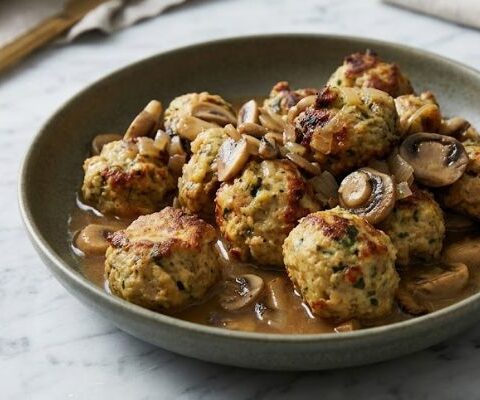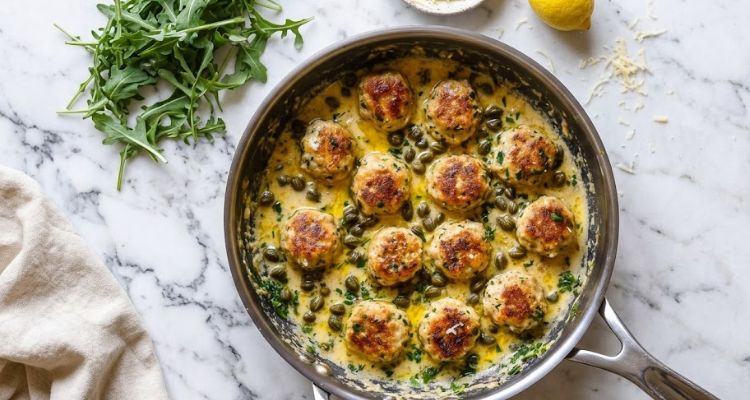
Giada chicken piccata meatballs from Giada De Laurentiis fold capers, lemon zest, and Parmesan into ground chicken, then broil the meatballs before finishing in a lemon caper sauce. And the recipe makes 22 meatballs at approximately 60 calories each in about 30 minutes, since the broiler and sauce work almost simultaneously.
Most meatball recipes brown in a skillet, but Giada uses the broiler to golden all 22 at once on a single baking sheet. So every meatball gets an even crust in about 7 minutes without the batching and oil splatter that pan-frying requires.
Soaking the torn bread in milk and egg before mixing it into the chicken is the step that keeps these meatballs tender instead of rubbery. And if you skip the paste and add dry bread crumbs directly, ground chicken dries out fast under the broiler because there is no moisture trapped inside each ball.
Source: Giada De Laurentiis (Giadzy.com)
Giada Chicken Piccata Meatballs
Course: Chicken, DinnerCuisine: ItalianDifficulty: Easy4
servings15
minutes15
minutes60
kcalTorn bread mashed with milk, egg, and Parmesan forms a paste before ground chicken, capers, lemon zest, and parsley fold in and the meatballs broil golden. Then a shallot-flour roux thins with chicken broth and lemon juice, capers stir in, and the broiled meatballs simmer gently in the finished sauce.
Ingredients
- For the meatballs:
1/2 cup torn soft white bread, crust removed
2 tablespoons whole milk
1/2 cup freshly grated Parmigiano Reggiano cheese
1 large egg
1 shallot, finely chopped
2 tablespoons chopped capers
1 teaspoon grated lemon zest (from 1 lemon)
1/2 teaspoon kosher salt
2 tablespoons chopped Italian parsley
1 pound ground chicken
2 teaspoons olive oil, for the baking sheet
- For the sauce:
2 tablespoons olive oil
1 shallot, chopped
1/2 teaspoon kosher salt
2 1/2 teaspoons all-purpose flour
1 1/2 cups low-sodium chicken broth
2 tablespoons freshly squeezed lemon juice (from 1/2 lemon)
2 tablespoons capers, drained
Freshly grated Parmigiano Reggiano, to serve
2 tablespoons chopped Italian parsley
Directions
- Preheat the broiler: Set to high and position a rack in the top third of the oven.
- Prep the baking sheet: Then drizzle a straight-sided baking sheet with 2 teaspoons oil and set aside.
- Make the bread paste: In a bowl, combine the torn bread, milk, Parmesan, and egg, and mash together into a paste.
- Let it rest: Then let the mixture sit for 5 minutes so the bread absorbs the liquid fully.
- Add the seasonings: Once rested, stir in the shallot, capers, lemon zest, salt, and parsley.
- Mix in the chicken: Then add the ground chicken and mix gently with your hands until just combined.
- Shape the meatballs: Once mixed, form into 1 1/2-tablespoon-sized balls with damp hands and place on the prepared sheet.
- Broil until golden: Then broil for about 7 minutes until golden brown on top, and set aside.
- Start the sauce: While the meatballs broil, heat the olive oil in a medium skillet over medium heat.
- Cook the shallot: Then add the chopped shallot and salt, and cook about 1 minute until fragrant.
- Add the flour: Once the shallot softens, sprinkle in the flour and whisk until smooth.
- Build the sauce: Then whisk in the chicken broth and lemon juice until smooth, and bring to a simmer.
- Add the capers: Once simmering, reduce the heat to gentle and stir in the capers.
- Add the meatballs: Then nestle the broiled meatballs into the sauce and simmer gently to warm through.
- Finish and serve: Once heated, sprinkle with parsley and grated Parmesan and serve.
FAQs
Can I use ground turkey instead of ground chicken?
Ground turkey swaps in at the same weight, though it tends to be slightly drier than chicken after broiling. And if you use turkey, add an extra tablespoon of milk to the bread paste so the meatballs stay tender inside.
But ground chicken has a milder flavor that lets the lemon zest and capers come through more clearly. Since the piccata treatment relies on those bright ingredients, chicken is the better match for this specific sauce.
Why does the recipe use torn bread instead of breadcrumbs?
Torn bread soaked in milk and egg creates a paste called a panade, which traps moisture inside the meatball as it cooks. And dry breadcrumbs absorb moisture from the meat instead of adding it, so the finished texture is drier and firmer.
The 5-minute rest after mashing is important, because the bread needs time to fully hydrate before the chicken goes in. Since ground chicken is already lean, that extra moisture is the difference between a juicy meatball and a rubbery one.
Can I pan-fry these instead of broiling?
Pan-frying works in 2 tablespoons of olive oil over medium heat for about 3 minutes per side, turning carefully with tongs. But you need to cook in batches since 22 meatballs do not fit in a single layer, and each batch takes longer than the 7-minute broiler method.
The broiler browns the tops evenly without flipping, which is why Giada chooses it for this recipe. And the same quick-broil approach would work for the bread paste meatballs in the giada beef and cheese manicotti filling if you wanted to brown them before stuffing.
What should I serve these with?
Giada suggests serving over arugula for a light lunch, alongside rice or orzo, or as an appetizer on their own. And spooning the lemon caper sauce over the meatballs and a bed of orzo catches every drop without overwhelming the plate.
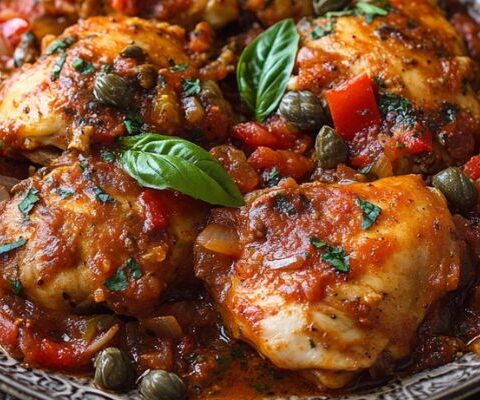
For a full Giada dinner spread, start with these as an appetizer and follow with the giada chicken cacciatore as the main course. But keep the sides light, because both dishes have bright, acidic sauces that pair better with simple greens than with heavy starches.
How should I store and reheat leftovers?
The meatballs and sauce store together in an airtight container in the fridge for up to 3 days, and the sauce keeps the chicken moist as it sits. Then reheat gently in a covered skillet over medium-low until the sauce simmers, about 5 minutes.
But do not reheat on high heat, because the flour-thickened sauce breaks and the lean chicken meatballs dry out quickly. And add a splash of chicken broth when warming, since the flour continues to thicken the sauce as it cools overnight.