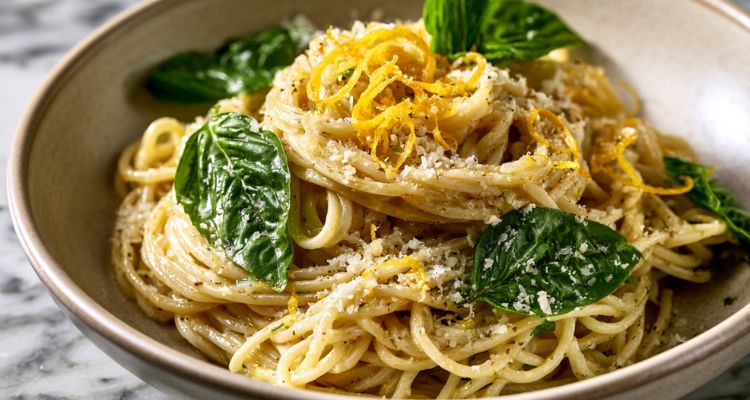
Giada lemon spaghetti is a bright pasta with olive oil, Parmesan, and fresh lemon juice at about 810 calories per serving. And this recipe from Giadzy takes just 30 minutes, since the sauce comes together while the pasta boils.
But instead of a sauce with butter or cream, Giada whisks raw olive oil, lemon juice, and Parmesan in a bowl while the pasta boils. Hot pasta then melts everything into a silky coating as it rests, which is the trick behind the top seller at her Las Vegas restaurant.
And the step most people rush is letting the dressed pasta sit and soak, but those few minutes let the sauce thicken around each strand. So if you skip that rest, you end up with thin, oily noodles instead of the creamy coating Giada describes.
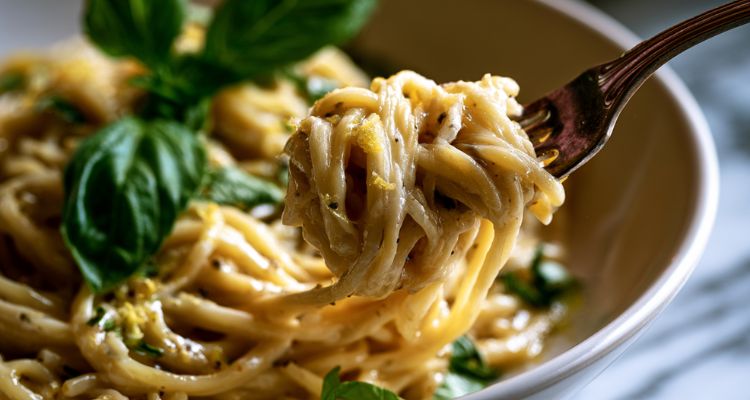
Giada Lemon Spaghetti
Course: Pasta, DinnerCuisine: American, ItalianDifficulty: Easy4
servings20
minutes10
minutes810
kcal30
minutesCombine olive oil, lemon juice, zest, and Parmesan in a bowl while spaghetti chitarra boils to al dente. Toss the hot pasta into the lemon mixture, then add splashes of cooking water until the sauce clings and turns glossy. Let everything rest so the noodles absorb the tangy coating, and finish with fresh basil and extra cheese.
Ingredients
- For the pasta:
1 pound spaghetti chitarra
Salt for the cooking water
- For the lemon-Parmesan sauce:
2/3 cup olive oil
2/3 cup grated Parmesan cheese
1/2 cup fresh lemon juice (about 3 lemons)
1 tablespoon lemon zest
1/2 teaspoon lemon oregano salt
- For the garnish:
1/3 cup chopped fresh basil leaves
Extra lemon zest
Extra Parmesan cheese
Directions
- Boil the water: Bring a large pot of water to a rolling boil, then season it generously with salt.
- Cook the pasta: Once the water is salted, add the spaghetti chitarra and cook for about 8 minutes until tender but still firm.
- Whisk the sauce: While the pasta boils, whisk the olive oil, Parmesan, lemon juice, lemon zest, and lemon oregano salt together in a large bowl.
- Drain and reserve: Once the pasta is done, drain it and save 1 cup of the starchy cooking water for the sauce.
- Toss the pasta: Add the hot pasta to the lemon-Parmesan mixture, then toss until every strand is coated.
- Add pasta water: Then pour in about a quarter cup of the reserved water at a time, tossing until the sauce turns silky and clings to the noodles.
- Let it rest: After the sauce clings, set the bowl aside for a few minutes and toss occasionally, because the pasta needs time to absorb it.
- Season and taste: After the rest, taste and add more lemon oregano salt as needed until the flavor is bright and balanced.
- Garnish and serve: Once it tastes right, top with extra lemon zest, chopped fresh basil, and more Parmesan, then serve right away.
FAQs
Can I use regular spaghetti instead of spaghetti chitarra?
You can swap in standard spaghetti, though the texture will change a bit. Spaghetti chitarra is cut into square-edged strands, so it grips the lemon-oil sauce better than round pasta does.
And linguine or bucatini work well too, since their flat or hollow shapes hold onto the coating. Whatever you choose, cook it one minute less than the package suggests, because the resting step softens it further.
What can I use if I don’t have lemon oregano salt?
Regular fine salt works as a base substitute, but you lose the herby, citrus-forward layer the blend adds. To get close, mix a half teaspoon of fine salt with a small pinch of dried oregano and a tiny grating of lemon zest.
Since the recipe only calls for a half teaspoon, the flavor gap is small, and you can adjust at the end. Taste after the resting step, then add a bit more salt or a squeeze of lemon if the pasta needs a lift.
Why does the recipe call for so much olive oil?
The two-thirds cup of olive oil is the entire base of this sauce, since there is no butter, cream, or stock in the dish. It blends with the lemon juice, Parmesan, and starchy water into the only coating this pasta has, so the fat carries flavor in every bite.
Because you taste the oil clearly in this dish, quality matters more than usual. A mild or fruity extra-virgin variety works best, since anything too peppery or bitter can fight with the lemon.
What goes well with this lemon spaghetti?
Giada suggests this as a side for grilled fish, which makes sense because the bright lemon and olive oil pair well with mild seafood. Branzino, snapper, or seared shrimp all work, since their delicate flavors let the citrus take the lead.
And for a meat option, thinly sliced grilled chicken stays light and picks up the lemony oil when laid on top. A simple arugula salad with shaved Parmesan rounds out the plate, since the peppery greens balance the richness of the oil.
How do I store and reheat leftover lemon spaghetti?
It keeps in a sealed container in the fridge for up to 2 days, though the texture changes as the pasta continues absorbing the sauce. The noodles soak up the oil and lemon overnight, so leftovers will be drier and more concentrated in flavor.
So warm them in a skillet over low heat with a splash of olive oil and a squeeze of fresh lemon to loosen things up. A microwave dries the pasta out even more, so the stovetop method is worth the extra minute or two.