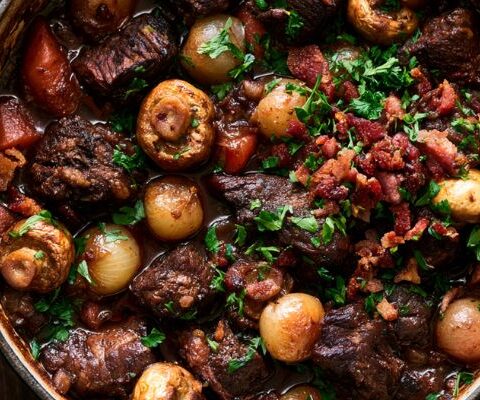
Giada winter minestrone from Giada De Laurentiis simmers Swiss chard, potato, and cannellini beans with pancetta and a Parmesan rind in a hearty broth. And the soup serves 6 at approximately 280 calories per serving in about 55 minutes, since the puréed beans thicken the broth without any flour or cream.
Instead of adding pasta or rice for body, Giada blends 3/4 cup of the beans with broth into a smooth purée and stirs it back in. So the soup gets a velvety thickness from within, which means it tastes lighter than a cream-based minestrone but still coats a spoon.
Nestling the Parmesan rind into the simmering broth is the step that builds the savory backbone of the entire pot. And if you skip it, the soup tastes flat even with the pancetta, because the rind releases a starchy umami depth over 15 minutes that no amount of extra salt can replicate.
Source: Giada De Laurentiis (Giadzy.com)
Giada Winter Minestrone Recipe
Course: SoupsCuisine: ItalianDifficulty: Easy6
servings15
minutes40
minutes280
kcalPancetta sautés with onion, carrots, celery, and garlic before Swiss chard, potato, and diced tomatoes join the pot. Then puréed cannellini beans and beef broth simmer with a Parmesan rind and rosemary until thick, and whole beans stir in at the end.
Ingredients
2 tablespoons olive oil
1 onion, chopped
2 carrots, peeled and chopped
2 celery stalks, chopped
3 ounces thinly sliced pancetta, coarsely chopped
2 garlic cloves, minced
1 pound Swiss chard, stems trimmed, leaves coarsely chopped
1 russet potato, peeled and cubed
1 (14-oz.) can diced tomatoes
1 fresh rosemary sprig
1 (15-oz.) can cannellini beans, drained and rinsed
2 (14-oz.) cans low-sodium beef broth
1 ounce piece Parmesan cheese rind
2 tablespoons chopped fresh Italian parsley
Salt and pepper
Directions
- Sauté the aromatics: Heat the olive oil in a heavy pot over medium heat, then add the onion, carrots, celery, pancetta, and garlic.
- Cook until soft: Then sauté for about 10 minutes until the onion is translucent.
- Add the greens and potato: Once the onion is soft, stir in the Swiss chard and cubed potato and sauté for 2 minutes.
- Add the tomatoes: Then add the diced tomatoes and rosemary sprig, and simmer about 10 minutes until the chard wilts and the tomatoes break down.
- Blend some of the beans: Meanwhile, purée 3/4 cup of the beans with 1/4 cup broth in a food processor until almost smooth.
- Build the broth: Then add the puréed bean mixture, remaining broth, and Parmesan rind to the pot.
- Simmer until tender: Once everything is in, simmer about 15 minutes, stirring occasionally, until the potato pieces are tender.
- Add the whole beans: Then stir in the remaining whole beans and parsley.
- Finish the soup: Once the beans are heated through and the soup is thick, about 2 more minutes, season with salt and pepper.
- Discard and serve: Then remove the Parmesan rind and rosemary stem, and ladle into bowls.
FAQs
Why does the recipe use beef broth instead of chicken broth?
Beef broth adds a deeper, richer base that holds up against the pancetta and Parmesan rind better than lighter chicken broth. And since there is no pasta or cream diluting the liquid, the broth flavor comes through clearly in every spoonful.
But chicken broth or vegetable broth work as swaps if beef is unavailable, though the finished soup will taste lighter. And if you go vegetarian by dropping the pancetta, switch to vegetable broth and add an extra tablespoon of olive oil so the aromatics still have enough fat to sauté properly.
What does blending part of the beans do?
Puréeing 3/4 cup of beans with broth creates a starchy paste that thickens the soup from within, so you get a velvety body without adding flour or cream. And the remaining whole beans go in at the end to give each bowl visible bites of texture alongside the smooth base.
This bean-thickening technique is an alternative to the flour roux used in dishes like the giada chicken cacciatore, where dredged chicken releases starch into the sauce. But blending beans works better in a brothy soup, because flour can turn the liquid pasty if you add too much.
Can I use kale instead of Swiss chard?
Kale holds its shape better during the simmer and adds a slightly more bitter, earthy flavor than chard. And since kale leaves are tougher, chop them smaller and add them a few minutes earlier to give them time to soften fully.
But chard stems are edible and add a mild sweetness that kale stems do not, so trim carefully if you swap. And spinach works too, though add it in the last 2 minutes since it wilts almost instantly and overcooking turns it slimy.
Can I make this soup ahead?
Minestrone tastes better the next day because the Parmesan rind and pancetta flavors continue to deepen overnight. So cook it through, cool it, and refrigerate in the pot for up to 3 days.
Then reheat on the stovetop over medium-low and add a splash of broth if the puréed beans thickened the base too much in storage. And the same overnight improvement applies to the giada beef and butternut squash stew, where the Marsala and rosemary soak deeper into the meat after a night in the fridge.
What should I serve alongside this minestrone?
Giada says on the page that crusty bread is the ideal pairing for soaking up the thick broth at the bottom of the bowl. And a simple green salad with a lemon vinaigrette adds freshness without competing with the savory, umami-heavy soup.
But skip pasta on the side, because the puréed beans and potato already fill the starchy role inside the pot. And a drizzle of good olive oil and a sprinkle of grated Parmesan on each bowl finishes the presentation the way Italian trattorias serve it.