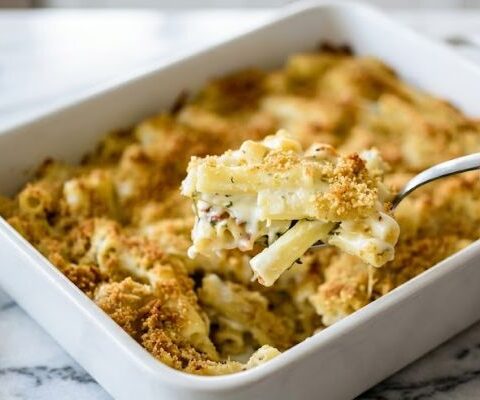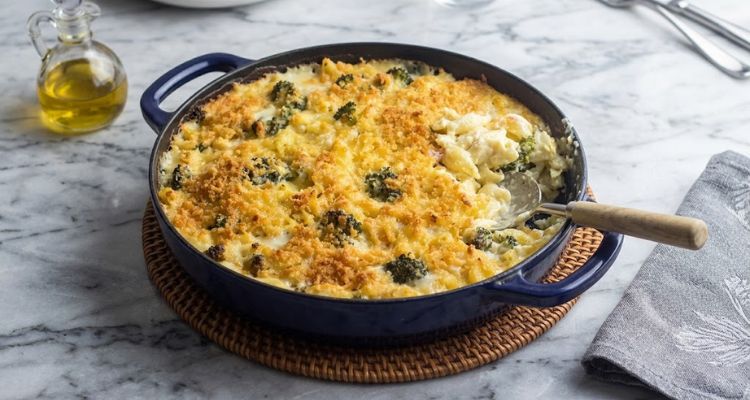
Giada creamy Parmesan baked pasta folds shell pasta and broccoli into a béchamel sauce with provolone and Parmesan, then bakes under a panko breadcrumb crust at 425°F. From Giada Entertains, it serves 8 at around 820 calories in about an hour, since the oven only needs 20 minutes after the stovetop work.
Rather than stirring cheese into plain boiled pasta the way most baked mac recipes do, Giada De Laurentiis builds a full béchamel first from butter, flour, milk, and heavy cream. That roux-based sauce coats every shell evenly, which means the cheese melts into a smooth, clinging layer instead of clumping in patches.
Pay close attention to blanching the pasta for only 4 minutes, since it finishes cooking inside the hot sauce and again in the oven. Boil it any longer and the shells turn mushy by the time the panko topping browns, because they absorb liquid at every stage.
Source: Giada Entertains (Giada De Laurentiis)
Giada Creamy Parmesan Baked Pasta
Course: PastaCuisine: ItalianDifficulty: Easy8
servings15
minutes50
minutes820
kcalButter and flour cook into a roux before milk and heavy cream whisk in to form a thick béchamel. Then 4 cups of grated cheese melt into the sauce, and blanched shells, reserved pasta water, and broccoli fold in. And a Parmesan panko topping goes on last before 20 minutes at 425°F turns the crust golden and bubbly.
Ingredients
- For the panko topping:
1/2 cup panko breadcrumbs
1/2 cup freshly grated Parmesan cheese
2 Tbsp olive oil
1/2 tsp kosher salt
- For the pasta and sauce:
1/4 cup (1/2 stick) unsalted butter, plus more for the pan
1/4 cup flour
2 1/2 cups whole milk, room temperature
2 cups heavy cream
2 cups grated mild provolone cheese
2 cups freshly grated Parmesan cheese
1 1/4 tsp kosher salt
1 lb medium shell pasta, blanched for 4 minutes, drained, 1/4 cup pasta water reserved
3 cups broccoli florets, cut into 1/2-inch pieces
Directions
- Preheat the oven: Set it to 425°F, then butter a medium braiser or baking dish so it is ready when the pasta is assembled.
- Make the topping: In a small bowl, mix the panko, 1/2 cup Parmesan, olive oil, and 1/2 teaspoon salt, then set aside.
- Start the roux: Place the braiser over medium heat, melt the butter, then whisk in the flour until the mixture is smooth.
- Build the béchamel: Slowly whisk in the milk and heavy cream, stirring constantly to prevent lumps, then bring the mixture to a simmer.
- Melt in the cheese: Once simmering, whisk in the provolone and 2 cups of Parmesan until melted and smooth, since adding it off a full boil keeps the cheese from breaking.
- Season the sauce: Stir in the 1 1/4 teaspoons of salt, then taste and adjust before the pasta goes in.
- Fold in the pasta and broccoli: Add the blanched shells, reserved pasta water, and broccoli florets, then fold everything together so the sauce coats each shell.
- Add the topping: Spread the panko mixture evenly across the surface, since an even layer browns uniformly in the oven.
- Bake until golden: Place the dish in the top third of the oven and bake for 20 minutes, or until the top turns golden brown and the edges bubble.
- Rest and serve: Let the pasta sit for 5 minutes after pulling it from the oven, so the sauce thickens slightly and the shells hold together when scooped.
FAQs
Why does the recipe blanch the pasta for only 4 minutes?
Four minutes cooks the shells just enough to soften the outside while the center stays firm, and the hot béchamel and 20-minute bake finish the job. Fully cooked pasta would absorb even more liquid in the oven, so by the time the panko browns, the shells would be blown out and mushy.
Draining and reserving 1/4 cup of starchy pasta water matters too, because that starch helps the cheese sauce cling to the shells instead of pooling at the bottom. Fold the water in with the pasta, since it thins the sauce just enough to move freely around the broccoli.
Can I assemble this ahead of time?
Giada notes you can fold in the pasta and refrigerate the dish covered for up to 2 days before baking, which makes it ideal for entertaining. Add the panko topping right before it goes into the oven, since the crumbs get soggy if they sit in the fridge.
Pull the dish out about an hour before baking so it reaches room temperature, because a cold casserole bakes unevenly and the center stays cool while the edges overcook. Add a few extra minutes to the bake time if it still feels cold, and watch for bubbling edges as your cue.
Can I swap the broccoli for another vegetable?
Cauliflower florets work as a direct substitute cut to the same 1/2-inch size, since they cook at the same rate and hold up in the thick sauce. Frozen peas folded in at the end also work, though they add sweetness that changes the overall flavor.
Spinach is another option, but wilt and squeeze it dry before folding in, because raw spinach releases water that thins the béchamel. Whichever swap you choose, keep the pieces small so they distribute evenly and every scoop gets some green. For another Giada pasta bake that layers Italian cheeses with vegetables, try her Giada asparagus lasagna.
What makes the panko topping crisp instead of soft?
Tossing the panko with olive oil before it goes on top coats each crumb in fat, which fries them in the oven heat and creates a golden crust. Without the oil, dry panko just toasts unevenly and stays pale in spots.
Baking in the top third of the oven puts the topping closest to the heating element, so it browns from above while the sauce bubbles from below. That positioning is deliberate, because the middle rack would cook the sauce through but leave the panko underdone.
What other cheeses can I use in the sauce?
Fontina melts smoothly and brings a buttery, slightly nutty flavor that works well alongside Parmesan. Gruyère is another option, though it leans more French than Italian and changes the overall flavor profile.
Avoid pre-shredded bagged cheese, because the anti-caking starch coats the shreds and prevents them from melting into a smooth sauce. Grate both cheeses fresh on a box grater, since the difference in melt and texture is obvious. And for another Giada cheese-heavy recipe that pairs well on a weekly rotation, her Giada chicken parmesan uses mozzarella and Parmesan in a completely different way.