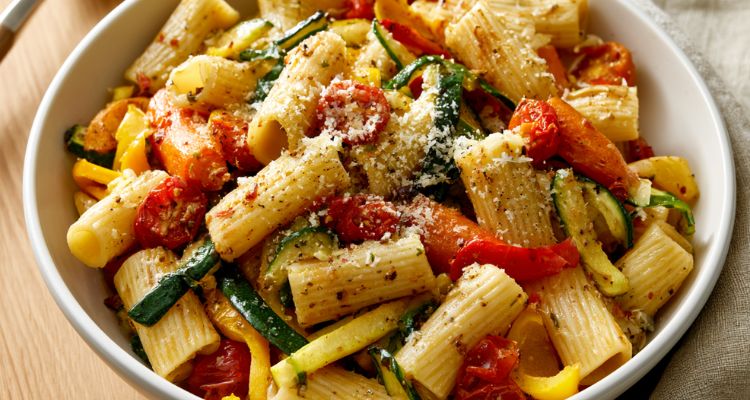
Giada’s Pasta Primavera tosses oven-roasted carrots, zucchini, yellow squash, and two colors of bell pepper with mezzi rigatoni and canned datterini tomatoes for a bright, vegetable-packed dinner ready in about 45 minutes.
Giada shared this version on giadzy.com with a note about its origin at Le Cirque in 1970s New York. Her update skips the traditional blanching and roasts the vegetables instead, swapping labor-intensive prep for caramelized sweetness with half the effort.
Splitting the vegetables across two large sheet pans at 450°F (230°C) is what gives them brown, caramelized edges instead of steamed, limp strips. Crowd everything onto one pan and the moisture trapped between the pieces stops any real browning, so the whole dish tastes flat and boiled.
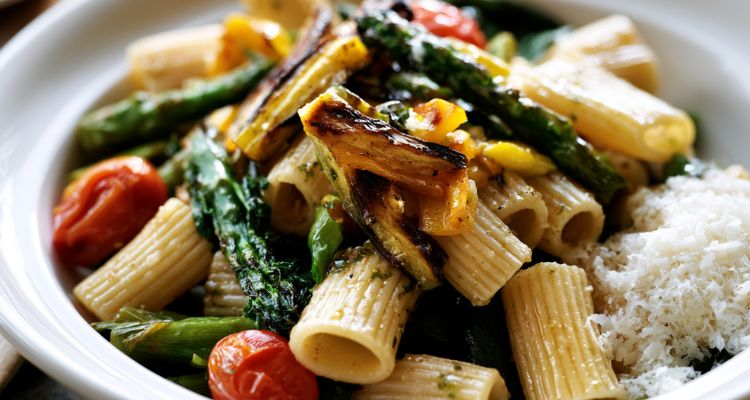
Giada Pasta Primavera
Course: Pasta, DinnerCuisine: Italian, AmericanDifficulty: Easy6
servings15
minutes30
minutes380
kcal45
minutesSheet-pan roasted spring vegetables tossed with al dente short pasta and sweet datterini tomatoes, finished with a splash of starchy cooking water and a shower of Parmesan. No blanching, no fuss, just deep caramelized flavor in every bite.
Ingredients
3 carrots, peeled and cut into thin strips
2 medium zucchini (or 1 large), cut into thin strips
2 yellow squash, cut into thin strips
1 onion, thinly sliced
1 yellow bell pepper, cut into thin strips
1 red bell pepper, cut into thin strips
1/4 cup (60ml) olive oil
1 1/2 teaspoons kosher salt
1 tablespoon Italian seasoning
1 lb (450g) short pasta, such as mezzi rigatoni
1 (14 oz / 400g) can datterini tomatoes
1/2 cup (50g) grated Parmesan
Directions
- Preheat the oven to 450°F (230°C).
- Season the vegetables. Toss carrots, zucchini, yellow squash, onion, and both bell peppers with olive oil, salt, and Italian seasoning on a large heavy baking sheet.
- Divide between two pans. Transfer half the vegetable mixture to a second heavy baking sheet. Spread both pans in an even single layer.
- Roast the vegetables. Bake until carrots are tender and the edges begin to brown, stirring once after the first 10 minutes, about 20 to 25 minutes total.
- Cook the pasta. While the vegetables roast, boil the pasta in a large pot of salted water until al dente, about 8 minutes. Drain, reserving 1 cup (240ml) of the cooking liquid.
- Toss everything together. Combine pasta and roasted vegetables in a large bowl. Add the datterini tomatoes with all their juices and enough reserved pasta water to moisten. Season with salt to taste and serve with grated Parmesan.
Notes
- Giada suggests doubling the recipe because it only gets better the next day.
FAQs
Why does Giada roast the vegetables instead of blanching them?
Traditional primavera blanches each vegetable in separate pots, which means careful timing for every single cut. Roasting at 450°F (230°C) caramelizes the natural sugars in the carrots, squash, and peppers with barely any hands-on work.
The browning adds a sweetness that blanching strips away because boiled vegetables lose flavor to the water. Those roasted edges hold their character even after tossing with pasta and tomatoes, so the vegetables taste like the star rather than an afterthought.
Why use datterini tomatoes instead of regular canned tomatoes?
Datterini are small, oblong Italian tomatoes with a natural sweetness and lower acidity than standard canned varieties. They burst into the hot pasta without needing to cook down, coating each piece of rigatoni with bright, concentrated tomato flavor.
Giada calls for adding them juice and all, which is the key detail. The liquid from the can mixes with the reserved pasta water to create a light sauce that clings to the roasted vegetables without drowning them.
Why reserve the pasta cooking liquid for this dish?
This recipe has no cream, butter, or heavy sauce, so the starchy pasta water is what brings everything together. A splash loosens the roasted vegetables and tomatoes into a light coating that clings to each rigatoni tube.
Add the water gradually because you may not need the full cup. Too much thins the dish into soup, while just enough creates a glossy sheen that connects the pasta and vegetables into one cohesive bowl.
Can you swap the Italian seasoning for individual fresh herbs?
You can use a mix of fresh oregano, thyme, rosemary, and basil, about 1 tablespoon total, chopped fine. Toss them with the oil and vegetables before roasting, though tender herbs like basil may darken at 450°F (230°C).
A more reliable swap is adding half the fresh herbs before roasting for depth and scattering the rest over the finished pasta for brightness. If you enjoy Giada’s herb-forward pastas, her Lemon Spaghetti takes a similar fresh approach.
How should you store leftover pasta primavera?
Giada notes on the source page that this dish only gets better the next day, so leftovers are worth planning for. Transfer to an airtight container and refrigerate within two hours for up to 3 days.
Reheat in a skillet over medium heat with a splash of water or olive oil to loosen the pasta. The vegetables soften further but the roasted flavor holds. For a light Italian finish alongside, Giada’s Chia Seed Pudding makes a fresh contrast to the warm, savory pasta.